Why the best communicators are becoming anthropologists.
We are living through what I believe is a trust recession. Every day, we are flooded with more content than any generation before us. News alerts. Podcasts. Social media posts. AI-generated articles. Corporate statements. Marketing campaigns. Thought leadership pieces. Press releases. There is no shortage of information, yet somehow, trust feels harder to find than ever.
People question headlines, they question experts, they question institutions, they question brands. Increasingly, they question whether the content they’re reading was written by a human at all. For years, communicators believed the challenge was capturing attention. Today, I think the challenge is something entirely different.
Attention is cheap. Trust is expensive. And becoming more expensive by the day.
After more than three decades working in public relations, I have come to an unexpected conclusion: the best communicators are no longer marketers, they are anthropologists. The publicist of the future isn’t simply someone who can write a press release or pitch a story, the communicator of the future is someone who understands people.
Why do we believe what we believe?
Why do certain stories spread while others disappear?
Why do communities form around ideas, brands, causes, and movements?
Why do some messages feel authentic while others feel manufactured?
Those questions have become far more important than mastering the latest algorithm or AI platform. In many ways, artificial intelligence has accelerated this shift. AI can generate content in seconds, it can write articles, draft emails, summarize reports, create headlines, and even mimic human conversation. The quality is often impressive, but there is one thing AI cannot manufacture.
Trust.
Perhaps the greatest challenge of the AI era is that we are beginning to question reality itself. How many videos have you watched recently and paused to wonder, Is this real? Was this created by a human? Can I trust what I’m seeing? The line between authentic and artificial has never been more blurred. AI can generate faces that don’t exist, voices that never spoke, and videos of events that never happened. As these technologies become more sophisticated, skepticism becomes a natural response, yet this uncertainty only reinforces the value of trust. In a world where almost anything can be created, altered, or manufactured, authenticity becomes a competitive advantage.The question facing communicators today is no longer, Can we create content? The question is, Can people trust it when we do?
Trust is built through consistency, through experience. It is built through shared values and built when people feel seen, understood, and respected. No prompt can replicate that. The irony is that as content becomes easier to create, credibility becomes harder to earn. The organizations that will thrive over the next decade won’t necessarily be the ones producing the most content. They will be the ones creating the deepest connections.
I’ve seen this firsthand throughout my career, the stories that generate meaningful media coverage are rarely the ones with the biggest budgets. The leaders people follow are rarely the loudest, the brands that endure are rarely the trendiest. Instead, they are the ones that understand something fundamental about human nature. People want to belong, they want meaning. People want connection. People want to trust.
In recent years, I’ve become increasingly fascinated by what happens when businesses stop thinking of themselves as products and start thinking of themselves as communities. Throughout my career, I’ve worked with universities, filmmakers, nonprofits, entrepreneurs, and global brands. The ones that succeed aren’t necessarily the ones with the biggest budgets or the loudest voices, they’re the ones that understand their audience on a deeper level. A university is inviting students into a lifelong journey of growth and discovery. A filmmaker is asking an audience to care about a story they haven’t yet experienced. A nonprofit is inspiring people to believe their contribution can make a difference. An entrepreneur is convincing customers to take a chance on a new idea. At the heart of each of these relationships is trust, without it, even the best message falls flat. With it, people become advocates, supporters, customers, donors, and champions of the story you’re telling together.
Perhaps that’s why I’ve become so interested in experiences, not just communications campaigns, but places, conversations, gatherings, and stories that bring people together. In a world becoming increasingly digital, authentic human connection has become a premium commodity, the future belongs to those who can create it, this is why I believe the next generation of communicators will need to study more than media, they will need to study people.
Anthropology. Psychology. Behavior. Culture. Community.
Because the question is no longer how to capture someone’s attention, the question is whether they believe you when you have it, and in a world overflowing with content, that may be the most valuable skill of all. People don’t remember every message, they remember how you made them feel. Trust is simply the accumulation of those moments.
Here Are a Few Ways to Build Trust in an AI World:
- Lead with transparency. If AI was used in your process, say so. People don’t expect perfection, they expect honesty.
- Show your work. Share the thinking behind decisions, not just the polished outcome. Trust grows when people understand how you arrived at a conclusion.
- Be consistently human. Let your personality, values, and perspective come through. Authenticity isn’t about being flawless; it’s about being recognizable.
- Choose relationships over reach. A thousand meaningful connections are more valuable than a million passive impressions.
- Prioritize expertise over volume. Don’t create content simply because you can, create content because you have something worth saying.
- Make promises carefully…and keep them. Trust is built in small moments of consistency over time.
- Listen more than you broadcast. The best communicators spend as much time understanding people as they do speaking to them. Ask questions, be curious!
- Use AI as a tool, not a substitute for judgment. Technology can help create content, but it cannot replace experience, wisdom, empathy, or intuition.
- Tell stories, not just facts. Facts inform, stories connect. Trust is often built at the intersection of both.
- Remember that credibility compounds. Every interaction, every email, every conversation, every piece of content either deposits into or withdraws from your trust account.
And perhaps the most important lesson of all: In a world where almost anything can be generated, authenticity becomes a differentiator. In a world overflowing with content, trust becomes currency.
Starr Hall
Publicist. Storyteller. Trust Agent.
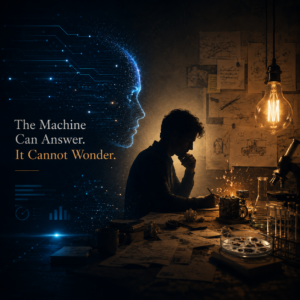
P.S. Yes, I threw myself into an AI-generated image for this post. The original photo is below. Which, I suppose, only reinforces the point: in today’s world, how do we know what’s real anymore? Oh, AI…